About the Books
Throwing the Baby Out with the Holy Water
This book is intended for those who feel something is missing. For those who cherish their Reformation heritage but experience the lack of a rooted faith. For those who crave spiritual depth yet have been cautioned against looking too far back. For those who rightly suspect that the ancient Church holds treasures we’ve overlooked, and who wish to recover them without compromising the gospel in the process.
I am one of those people. I am Protestant. I am grateful for the clarity, conviction, and gospel urgency that runs through the best of the Reformation tradition. However, I have also learned that the Reformation was not a blank slate. It was a return — a return to something already present in the early Church, long before the medieval corruptions that the Reformers rightly challenged.
That Early Church is ours too. The wisdom of the desert fathers is ours. The profound thinking of Catholic theologians, when in step with Scripture, is ours. The reverence of liturgical worship is ours. Mary’s example of discipleship is ours. The practice of confession is ours. These are not “Catholic things” that we’re borrowing. They are Christian things we left behind.
The goal of this book is not to argue for reunion with Rome. It’s not to flatten doctrinal differences or pretend that the Reformation doesn’t matter. It does matter — deeply. However, recovering lost wisdom does not betray the gospel; instead, it deepens our experience of it. It anchors us more fully in the historical Church and strengthens our present discipleship.
We live in an age of spiritual shallowness. Attention spans are short. Formation is thin. Many of our churches have become expressions of the broader culture — anxious, fragmented, performative, over-programmed, and emotionally underdeveloped. Our theological systems are sound, but our souls are brittle. What we need isn’t novelty; it’s rootedness.
And there is no root system richer than the one the Spirit has cultivated through two thousand years of global, historic Christianity. That root system includes more than just Calvin and Luther; it encompasses Irenaeus, Benedict, Teresa of Ávila, and yes, even Aquinas. It comprises the monastics and the mystics, along with rhythms and practices that were born in the desert and tested by fire.
We don’t honor our Protestant ancestors by staying shallow. We honor them by going deeper — by seeking the full maturity that the Church was always meant to grow into. If we are to become a people of resilience, depth, and beauty again, we must recover the practices and perspectives we once discarded. We must learn to live not only as people of truth, but as people of presence — soaked in prayer, humility, and the kind of holiness that cannot be faked.
This introduction is a doorway. In the pages ahead, we will explore what was lost—not to romanticize the past, but to recover what still holds the power to shape our future. We will examine ancient practices like confession, forgotten figures like the desert fathers, neglected teachings about Mary, and the immense intellectual and spiritual wealth of Catholic theologians who never stopped loving Scripture and Christ.
We will ask hard questions: Can Protestants re-engage with these issues without compromising our convictions? Can we recover a reverence for tradition without losing our dependence on Scripture? Can we build a Protestant future that is spiritually rich, historically informed, and deeply Christ-centered?
I believe the answer is yes.
Discipling Your Grandchildren
Recovering the Lost Art of Spiritual Eldership
In the modern West, aging is often treated as something to fight or hide. But in Scripture, it’s something to honor. Gray hair is a crown of wisdom. Elders are not sidelined—they are essential.
Throughout the Bible, the older generation is charged with spiritual responsibility. Psalm 78:4 says, “We will not hide them from their children, but tell to the coming generation the glorious deeds of the Lord.” Paul tells Titus to have older men and women teach the younger—not through lectures, but by the example of a faithful life.
But in today’s church, we’ve often separated by age. Children go here. Teens over there. Adults somewhere else. Grandparents… wait for heaven?
That’s not the biblical vision. Grandparents are meant to be spiritual stewards, not spectators. You’re not a backup parent. You’re a living witness.
This is a lost art. But it can be recovered. Not with programs—but with presence. Not with pressure—but with prayer. It starts with seeing your role differently: not as “retired,” but re-assigned.
“This is one of the absolute finest books on Grandparenting I have ever read. Steve White combines wonderful content on grandparenting with amazing writing and practical helps. He will motivate you to invest in your most important legacy yet. I could not put book down.”
—Jim Burns, PhD
Founder, HomeWord
Author of Doing Life with Your Adult Child: Keep Your Mouth Shut and the Welcome Mat Out and Finding Joy in the Empty Nest.
You have something your grandchildren can’t Google: memory.
You’ve seen God’s faithfulness over decades. You’ve walked through loss, waited through silence, rejoiced in mercy. Those stories are not just nostalgia—they’re theology in the flesh.

Tired of Saying “I’m Fine”?
The Gospel for the Not Okay
We often assume the gospel is good news for the strong: that Jesus came for the capable, obedient, and tidy. However, the gospel is not good news for those who are self-sufficient. It is not for those who have figured it out. It is not for those who never cry, question, or admit they are weary.
It is for the poor in spirit, the mourners, the meek, and those who hunger and thirst — not for answers, but for righteousness they cannot produce on their own.
Jesus never said, “Blessed are the emotionally self-contained.”
He never said, “Blessed are those who never crack under pressure.”
He said, “Come to Me, all you who are weary and burdened, and I will give you rest.”
We don’t need a gospel that toughens us up.
We need a gospel that makes us honest.
Misplaced Glory
The Glory That Belongs to Another
In Acts 3, Peter and John heal a man who has been lame since birth. It’s a remarkable miracle—exactly the kind of event that naturally draws a crowd. And it does. Luke tells us that the people “were filled with wonder and amazement.” They rush toward the apostles in awe, wide-eyed and marveling.
But Peter doesn’t accept the awe. He doesn’t bask in the glow of the moment. Instead, he interrupts the celebration with a disarming question: “Why do you stare at us as if by our own power or godliness we had made this man walk?” (Acts 3:12)
That verse is the key to this entire book.
Peter refuses to let their gaze remain on him. He senses the temptation. He sees the crowd beginning to assign power to the wrong place. And he stops it—not gently, but bluntly. Don’t look at us. Don’t assign us that glory. Don’t confuse the vessel with the source.
That’s the burden of every faithful pastor: to know when to step aside, how to redirect glory, and to sense when people are looking too closely—and to respond not with defensiveness or denial, but with joyful surrender. This is not about me. This is about Jesus.
But that response doesn’t happen naturally. It requires discipline. It involves crucifying the ego. It calls for training your soul to find worth in Christ, not in admiration. And in our cultural moment—where platforms are rewarded, charisma is monetized, and visibility is confused with value—that discipline is more difficult than ever.
Living Backwards
The Call to Live Backwards
A Future That Reaches for Us
Being a follower of Jesus is not just accepting a set of beliefs or belonging to a religious group. It means living in a new reality that challenges the current order and points toward its renewal. Christians are those who, by grace, have caught a glimpse of the world to come—and who, through the Spirit, are being shaped by its vision. We are not protectors of sacred nostalgia, preserving relics of a past era. We are messengers and ambassadors of a kingdom that has already begun in Jesus Christ. Our very lives are meant to testify to that coming world.
It is precisely within this tension—this “already and not yet”—that the shape of Christian discipleship becomes clear. Without this framework, our faith can quickly deteriorate into mere moralism, our worship into emotional escapism, and our church life into therapeutic individualism. But when we understand that we are called to embody the life of the age to come amid the present age, our actions take on a different significance.
This book offers an invitation to embrace a different way of living: to live backwards, not by regressing into the past, but in a more radical sense of living from the future. It is a call to reimagine what it means to live in the light of the kingdom—allowing the contours of the coming world to reshape our habits, desires, community life, and witness today.
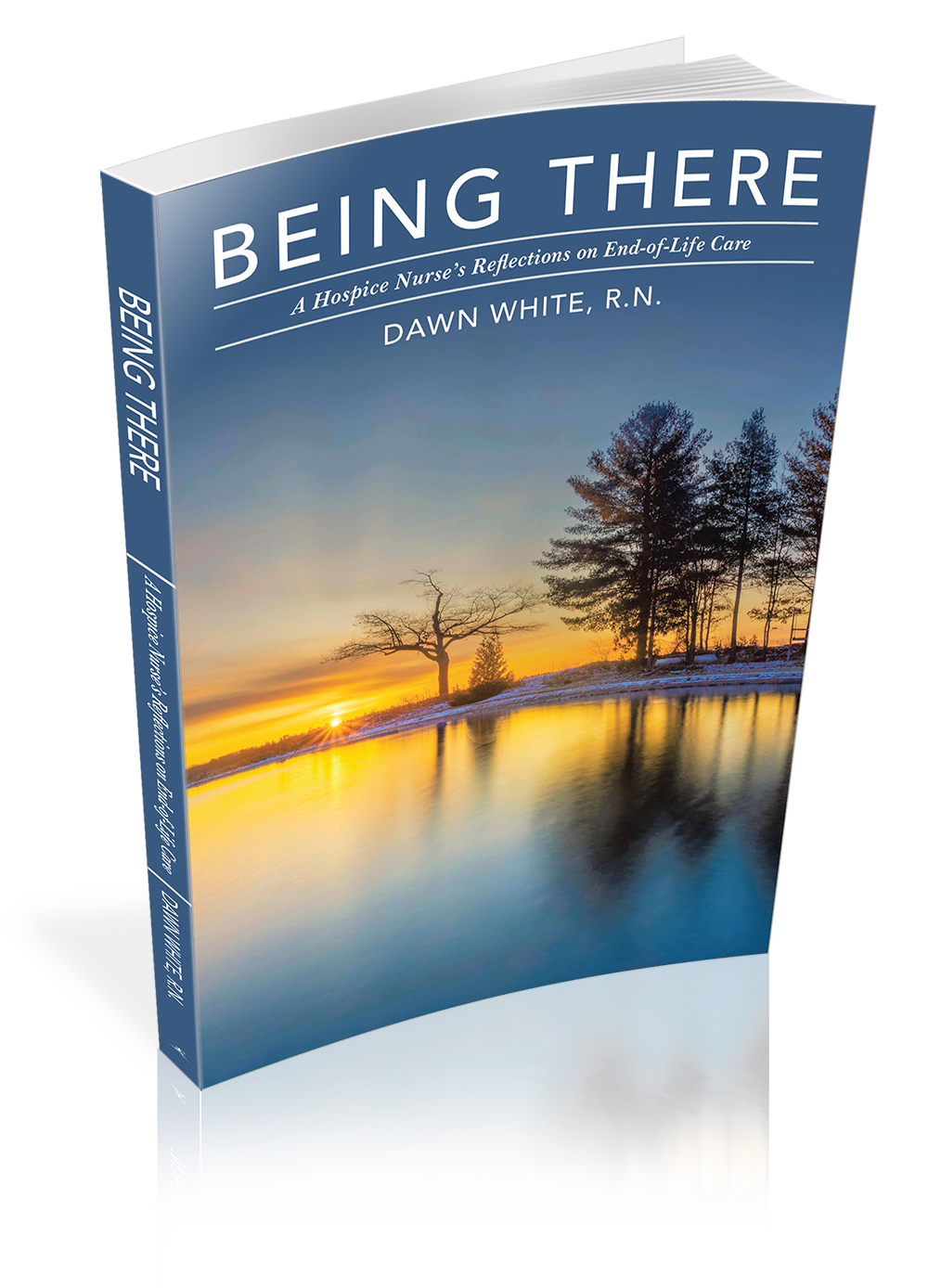
Being There
This tender, honest exploration of what it means to care for someone at the end of life invites readers into the quiet, often unseen moments of dying. Through intimate stories and practical wisdom, it reveals caregiving not merely as an act of duty but as a profound human exchange – where love, grief, resilience, and meaning coexist. Grounding and compassionate, it’s a guide for anyone navigating loss, presence, and the fragile beauty of a final goodbye.
The author offers a rare, deeply grounded perspective, shaped by years of work as a hospice registered nurse and by the intimate experience of caring for dying family members. At the bedside, both professionally and personally, she has witnessed the realities of dying in all their complexity: the medical, the emotional, and the profoundly human. This dual lens allows the author to bridge clinical knowledge and lived compassion, offering practical, honest, and deeply empathetic insights rooted in both professional expertise and personal love.
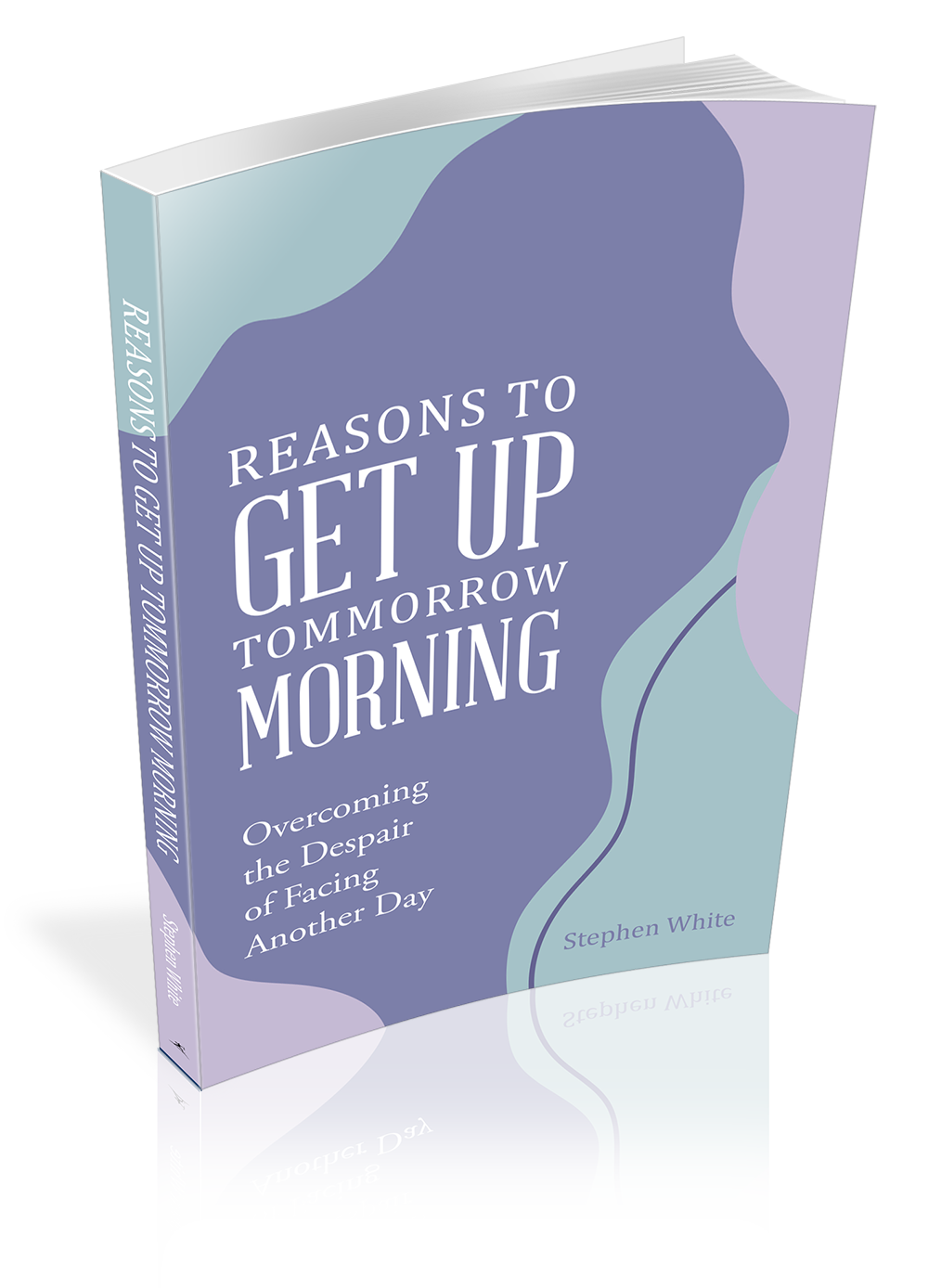
Reasons to Get Up Tommorrow Morning
I am a person of faith, but I am not writing this book only for people of faith. I am writing it for anyone who has ever opened their eyes in the morning and wondered whether there was a reason to keep them open. If you pray, I think you will find a friend in these pages. If you have given up on prayer, never started, or suspect the whole enterprise is a conversation with an empty room, I think you will find a friend here too. The question this book asks is not, finally, a religious question. It is a human question. It is the most human question there is: Is it worth it? Is any of it worth it? Is there anything on the other side of this night worth getting up for?
My answer is yes. But I do not want to give you my answer. I want to give you yours. Or, more precisely, I want to help you find it. It may be in a place you have not thought to look, which is almost certainly where it is, because that is how these things work. The treasure is buried in the field, the coin is lost under the furniture, and the sheep is in the ravine where nobody thought to search. The reasons to get up tomorrow morning are, I suspect, already somewhere in your life, hiding in plain sight, waiting for you to trip over them.
So here is what I propose. Let us walk together for a while. I will tell you what I have seen, and you can decide for yourself whether any of it is true. I will not raise my voice. I will not wag my finger. I will try to be honest about the times I have failed to get up, gotten up for the wrong reasons, or gotten up and wished I hadn’t. And maybe, somewhere along the way, in the space between my words and your reading of them, something will stir. Not a feeling, exactly. Something more like a recognition. Something more like the moment just before dawn, when the darkness is still the darkness but is no longer quite as sure of itself.
That is all I am after. That small, stubborn crack in the dark.
 imunify-bot-check